

The New Era of Marketing: Smarter, Braver, More Human
The CIM Scotland Conference 2026 on 17 September opened with a warm welcome from CEO Chris Daly. He thanked the CIM Scotland volunteer team, led by Chair Ellie Murphy, and the sponsors Iconic Resourcing, Eden Scott and Superstore Media.
Chris highlighted how marketing's biggest challenge used to be access to information; today it is the opposite: unlimited information, unlimited channels, limitless content and increasingly unlimited technology – particularly AI. Even so, he said marketing is, and always will be, about people, which is why the conference theme is so timely.
He took the three words of this year’s conference theme in turn:
- Smarter: this is about making better decisions, not adopting the latest technology. Technology provides answers, and smart marketers ask better questions. The marketers who thrive will neither fear AI nor blindly follow it but combine human judgement with machine intelligence.
- Braver: he defined this as action despite uncertainty. He cited the infamous Cadbury gorilla advert and said bravery means challenging assumptions, experimenting with new technologies, testing new business models, and speaking up for the customer in the boardroom. Algorithms optimise what already exists, while only people can imagine what comes next.
- More human: customers build relationships with brands that understand them, not with algorithms. Loyalty rests on trust, authenticity, empathy, purpose and belonging, and it requires alignment between what a brand says, what it does and what customers experience. Technology can create messages, but only organisations can create trust.
He closed by challenging the audience to be curious enough to become smarter and confident enough to become braver, and to keep hold of what makes marketing effective: understanding people.
Presentations followed from Nicola Thomson, Mark Choueke, Luan Wise, Mercy Abel, Karen Trickett, Emily Young and Benjamin Black – each offering the audience examples and reassurance that marketers still have a key role to play as part of a sustainable business.
The day closed with Benjamin, Karen, Luan and Emily joining Mercy for an audience Q&A, tackling some of the questions marketers are asking right now.
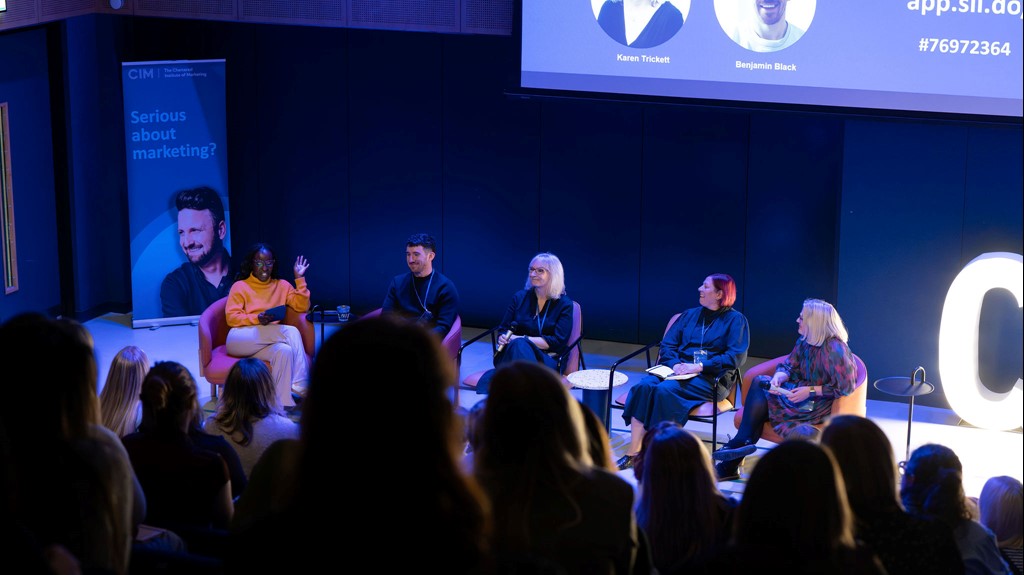
The panel (Mercy, Ben, Karen, Luan and Emily) - photo by Superstore Media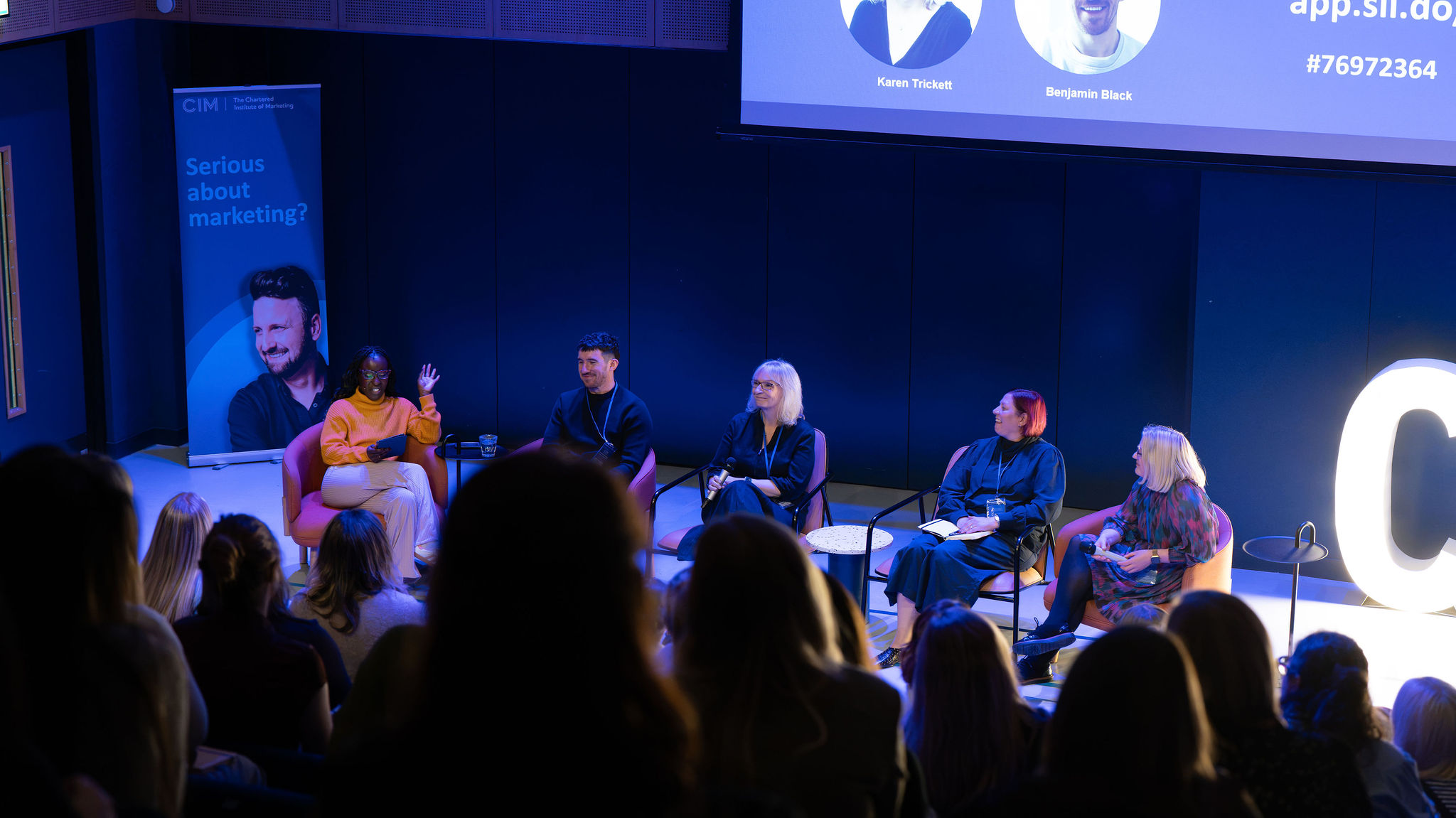
How do you manage senior leaders' expectations of AI?
Karen suggested that level of seniority makes little difference to the expectations we all have around AI. It’s a challenge being faced across all levels; how it could and should be used.
Right now, there is a need for constant education and influence on the opportunities available and how it can be most effectively integrated into workflows. Emily described an internal communications manager who runs a series on presenting with impact and authenticity, including using AI as a tool without letting it replace your personality.
Luan also suggested that conversations with senior leaders shouldn't be tactical. Marketers shouldn’t need to discuss social media follower counts or post likes with a CEO, for example. They should instead talk about business goals and opportunities, in the leadership team's language. Being too tactical keeps marketing in its departmental box.
Mercy summed it up as an open, continuous dialogue that should change as the technology does.
Is AI a sustainable solution, given the environmental concerns?
There is no doubt use of AI has environmental impacts. But Luan pointed out that marketing channels have always faced environmental concerns. Panellists with experience in direct mail recalled producing huge volumes of DM packs and the industry's later move away from polywrap and heavy use of ink, for example. AI is a new channel facing the same questions.
Karen noted that people have been through industrial revolutions before and found ways to tackle the resulting challenges. Views on AI differ, and they don't follow age. Once a technology transition arrives in marketing, it doesn't go away. The panel's approach was to operate in the best way possible in the reality of working that exists.
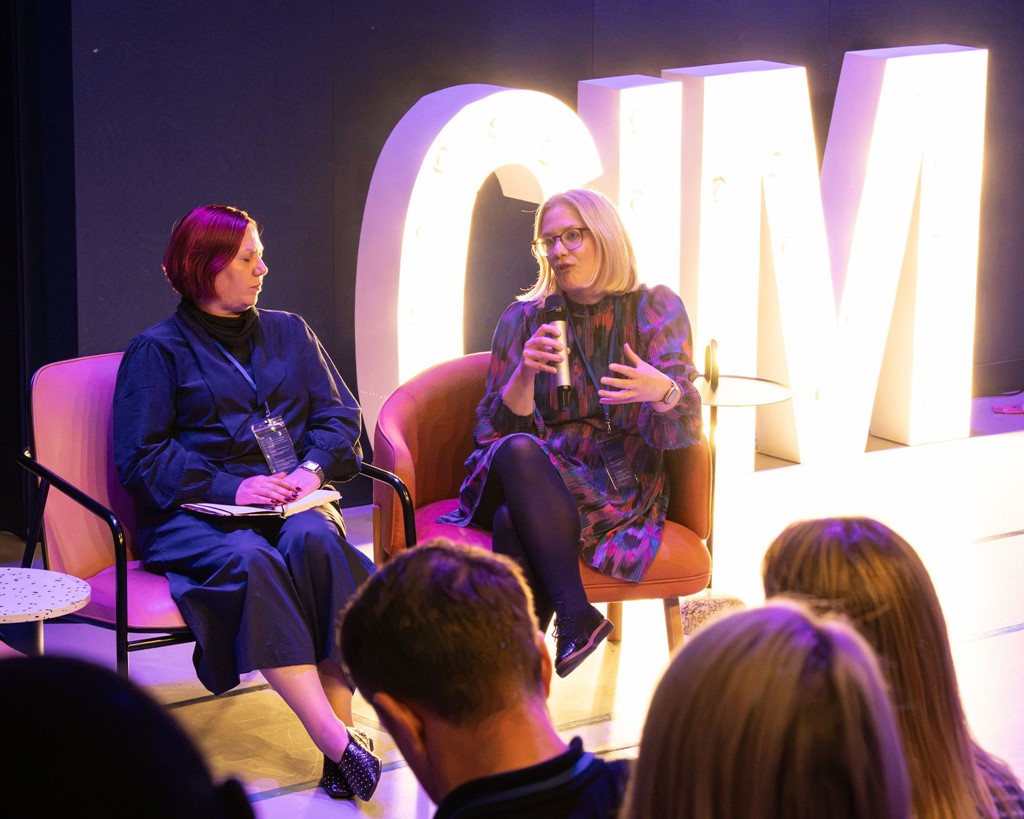
Emily discusses how AI is useful, but shouldn't replace personality - photo by Superstore Media
What would you say to people entering roles where junior tasks are being taken over by AI? And how do we stop AI stifling creativity?
Benjamin said their team had recently hired a digital marketing executive, and the feedback given was direct: you can tell when AI has been used for an application!
On creativity, the comparison was with Photoshop, which was once dismissed as ‘cheating’ and is now simply a daily tool. What matters is the human thinking that drives the output. If you use AI for creative work, use it creatively rather than relying on it to produce the finished piece. Strong prompts matter too; in the same way as a good creative brief is essential.
For people early in their working lives who don't yet know what they don't know, Luan suggested using AI to fill the gaps. Give it a scenario, such as a meeting with the CEO or an interview tomorrow and ask what questions to raise. Take those to the meeting, then feed the answers back into the AI tool to develop them. The panel described this as using AI to strengthen and bolster the work, not replace it.
Should we worry about AI reducing team sizes and entry-level jobs?
Karen said she is often asked this by young people studying marketing. Her answer was that marketing is the most important discipline in business, and she sees opportunity for the next generation, though a different kind of opportunity. Some short-sighted businesses may cut roles, but many bright people will also start their own businesses.
The overall view was that AI takes away manual work, not jobs. Junior marketers may get the chance to work on strategy from day one, rather than spending years on routine tasks first. Human judgement, relationships and time with people are what AI can't replace.
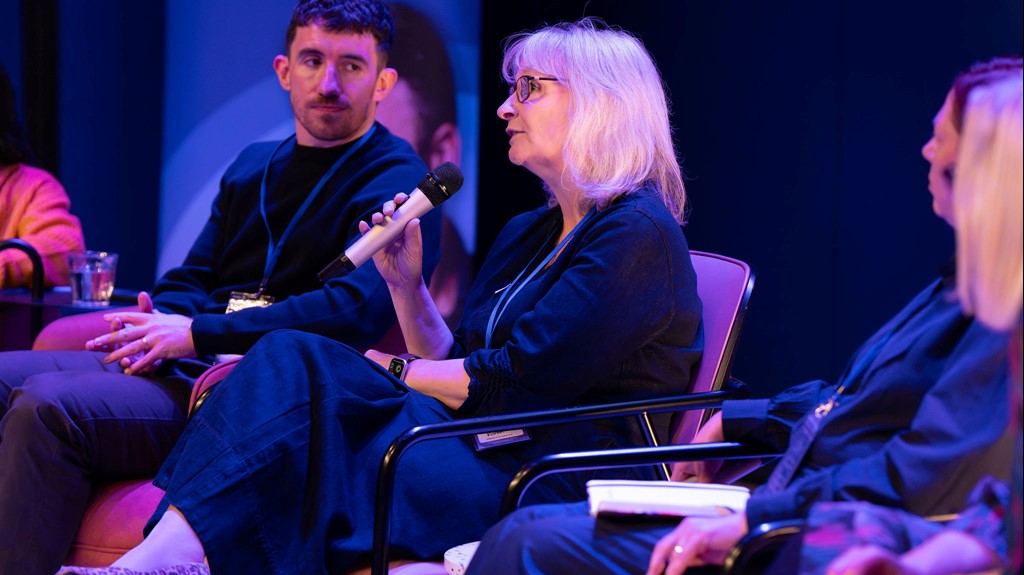
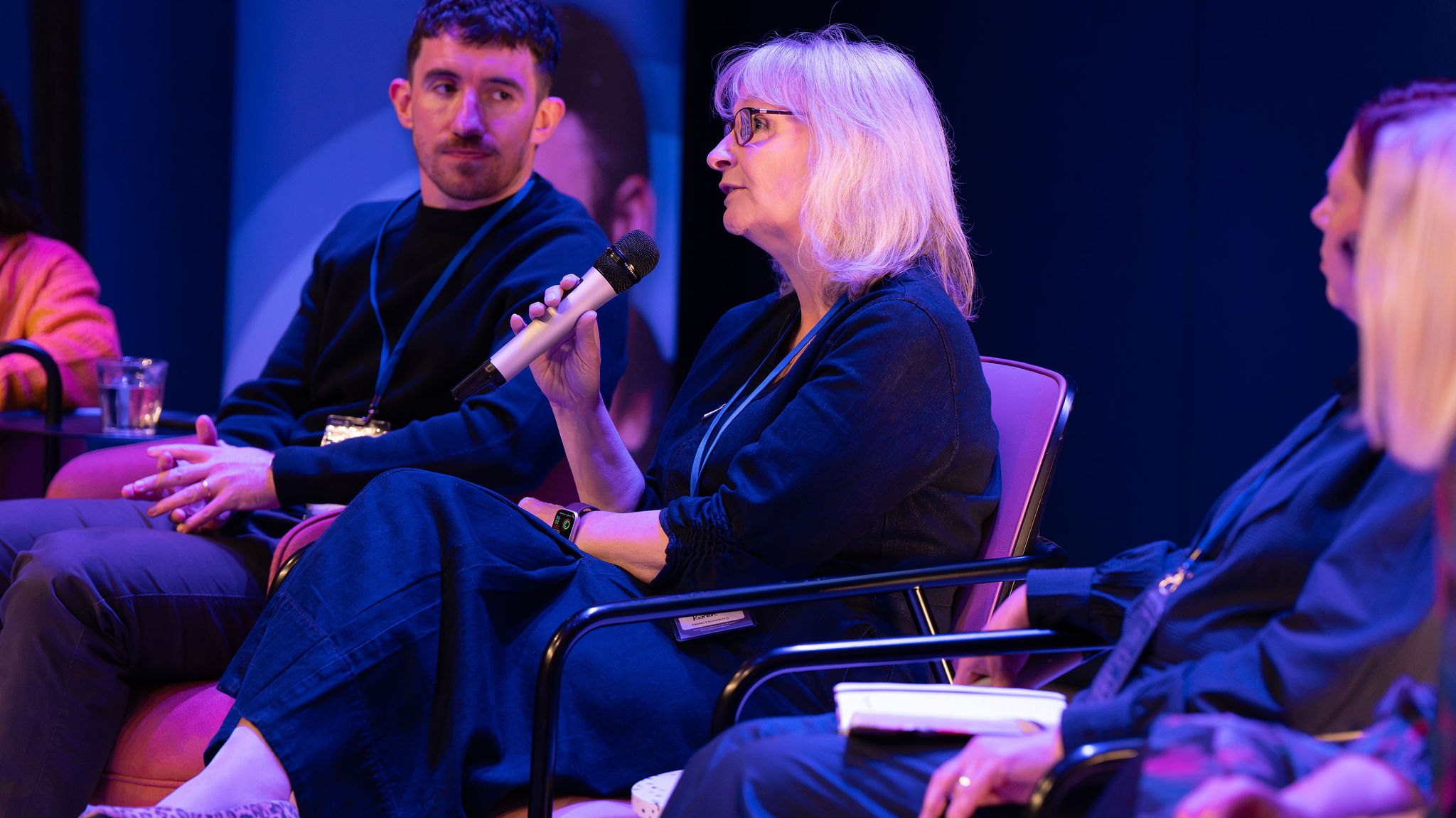 Karen discusses AI in the marketing space - photo by Superstore Media
What AEO (Answer Engine Optimisation) and long-tail keyword monitoring tools are available?
Benjamin said specialist tools are not always easy to find, and many come with a price tag. One team used a tool to identify which sources AI overviews pull from, then built pages and long-form content around that. Another panellist is using Copilot to work out what can be done organically before paying experts or buying every tool. Other tools mentioned were HubSpot, SEMrush and Profound.
Final thoughts
Across every question, and every presentation, the day reassuringly returned to the same point. AI works best as a tool that supports and strengthens the work, and the human thinking behind it is what makes the difference.